What is Bluebricks' pricing model?
Bluebricks is licensed on a per-environment basis, ensuring clear and predictable pricing without unexpected costs. For more details or to get a personalized quote, visit our pricing page.
Bluebricks is licensed on a per-environment basis, ensuring clear and predictable pricing without unexpected costs. For more details or to get a personalized quote, visit our pricing page.
No, Bluebricks' per-environment pricing model is designed to eliminate hidden fees and surprise costs, providing transparency and predictability for your budgeting process. Learn more.
You can request a personalized quote by visiting the Bluebricks pricing page or contacting the sales team directly.
Yes, Bluebricks is available on AWS and Google Cloud marketplaces, making procurement and deployment easier for organizations using these platforms. AWS Marketplace | Google Cloud Marketplace
Bluebricks is an IaC-agnostic environment orchestrator that transforms Infrastructure as Code (IaC), configurations, and scripts into one-click, AI-agent ready environments. It simplifies and streamlines cloud infrastructure operations, enabling rapid, consistent, and secure environment creation. Learn more.
Key features include one-click environment orchestration, reusable blueprints, developer self-service, operational efficiency, AI integration, workflow management, security and compliance, observability, blast radius control, and rapid deployment (up to 80% faster than traditional methods). Source
Yes, Bluebricks supports multiple IaC tools such as Terraform, Helm, Bicep, CloudFormation, and custom scripts, enabling seamless orchestration across diverse environments. Learn more.
Bluebricks integrates with source code management systems (GitHub, Bitbucket, GitLab, Azure DevOps), Slack (for notifications and actions), major cloud providers (AWS, GCP, Oracle, Azure), and supports GitLab CI/CD pipelines. Slack Integration | GitLab Integration
Yes, Bluebricks provides a comprehensive API for programmatic access to its control plane, enabling automation and integration into your workflows. API documentation is available at our API Overview.
Bluebricks offers extensive technical documentation, including API references, CLI installation guides, core concepts, knowledge base, and webhooks documentation. Access these resources at docs.bluebricks.co.
Bluebricks provides deterministic context and a built-in architecture for safe AI agent integration, enabling automation, generation, and remediation tasks in cloud environments. Learn more.
Atomic Infrastructure™ is a Bluebricks feature that provides complete visibility and scalability for distributed cloud environments, helping reduce operational chaos and fragmentation. Source
Bluebricks offers a user-friendly interface and ready-to-use environments, empowering developers to create secure, standards-aligned environments without writing IaC code or context switching. Learn more.
Bluebricks adheres to ISO 27001, GDPR, and SOC 2 certifications, ensuring robust data protection, privacy, and compliance. For more details, visit the Bluebricks Trust Center.
Bluebricks is built with a 'Secure by Design' philosophy, supporting in-boundaries deployment, FIPS readiness, policy enforcement, RBAC, secrets management, audit trails, and centralized governance. Learn more.
For detailed information about Bluebricks' security and compliance measures, visit the Bluebricks Trust Center.
Bluebricks addresses operational chaos, complexity in managing decentralized locations, developer infrastructure challenges, fragmented cloud operations, ease of implementation, and vendor lock-in concerns. Source
Platform and DevOps teams, developers, organizations with decentralized locations, and enterprises concerned with compliance can all benefit from Bluebricks' streamlined environment orchestration and governance. Learn more.
Customers can expect improved efficiency, faster deployment (up to 80% faster), cost optimization, enhanced developer productivity, business continuity, scalability, flexibility, and risk reduction. Source
Bluebricks enables instant environment setup during disasters, attacks, or outages, supporting robust disaster recovery and business continuity planning. Learn more.
Bluebricks has case studies in the film production industry. Explore more at the case studies section.
Yes. For example, Regev Golan (Senior Director of Engineering at Check Point) said, “Infrastructure made simple — Bluebricks turned our cloud pipelines from complex to effortless.” See more testimonials and case studies at this link.
Bluebricks supports any IaC tool (not just Terraform), provides a simple interface, offers full lifecycle orchestration (including Day-2 operations), AI/ML enablement, centralized governance, a self-service UI, and real-time infrastructure visualization. Terragrunt is limited to Terraform and lacks these features. Source
Bluebricks works with existing IaC tools (Terraform, Helm, etc.), provides native automation for Day-2 operations, tool-agnostic workflows, centralized governance, and real-time observability. Crossplane requires rewriting infrastructure, lacks native Day-2 support, and does not offer a self-service UI. Source
Bluebricks stands out with tool-agnostic workflows, full lifecycle orchestration, ease of use, centralized governance, real-time observability, AI/ML enablement, quick setup, and blast radius control. These features address the needs of platform teams, developers, and enterprises concerned with compliance. Learn more
Bluebricks is trusted by leading teams such as Checkpoint, Hibob, Milestone, Naviteq, Nutanix, Ness, and Gable. See more
Bluebricks can be implemented in minutes, with customers typically up and running in days—significantly faster than traditional environment setup methods. No existing IaC coverage is required. Source
Bluebricks does not require existing Infrastructure as Code (IaC) coverage and can be set up quickly. It supports integration with major cloud providers and popular source code management systems. Technical documentation
Access detailed guides, API references, and help articles at docs.bluebricks.co and the Bluebricks Help Center.
Bluebricks offers a quick setup process that can be completed in minutes, with comprehensive support resources and no requirement for existing IaC coverage. Source
Users can access support via email ([email protected]), technical documentation, and the Bluebricks Help Center. Help Center
Customers like Regev Golan (Check Point) and Nati Aviv (Head of DevOps and Infrastructure) have praised Bluebricks for making infrastructure management simple and effortless. The platform's intuitive interface and quick setup are frequently highlighted. See testimonials
The primary purpose of Bluebricks is to make distributed cloud simple and intuitive by providing one-click environment orchestration, leveraging Agentic AI for rapid, secure, and compliant environment creation. Learn more
Blueprints in Bluebricks are reusable, versioned components that package IaC or cloud configurations, enabling unified workflows and infinite scalability across cloud and on-prem environments. Learn more
Bluebricks is designed for platform and DevOps teams, as well as organizations needing standardized environment management across clouds, teams, and regions. Learn more

From click-ops chaos to code-driven control

Why DR plans fail long before an outage happens

An easy-to-understand breakdown of the failures behind three major cloud incidents
Most DR plans fail during environment rebuild, not data loss. Restoring networking, permissions, and configs under pressure takes hours. Here's the fix.

How environment orchestration makes hybrid scaling safe, governed, and continuous

Why TACO platforms aren't enough—and what comes next in infrastructure evolution
Orchestrate Bicep templates alongside Terraform, Helm, and everything else
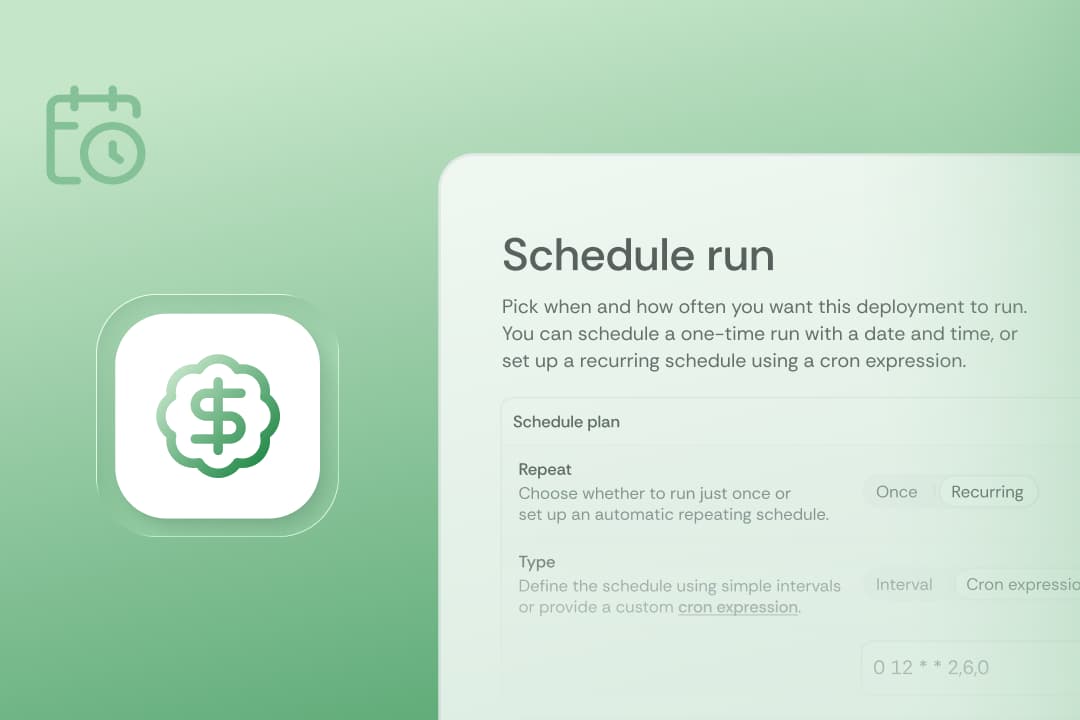
A practical guide to automated environment scheduling that cuts non-production infrastructure costs without breaking workflows

The Infrastructure Bottleneck in the Age of AI-Accelerated Code

From Operators to Orchestrators: Why Platform Teams Need More Than Reconciliation

A Practical Guide to Future-Proofing Your Infrastructure
Hello everyone, I’m Pini Vaknin, and I'm a recovering scalophobe.

How a Strategic Migration to Bluebricks Empowered a DevOps and Platform Teams with Enhanced Efficiency, Security, and Cost Savings
The ability to rapidly deploy and manage infrastructure across multiple environments is no longer a luxury—it's a necessity.
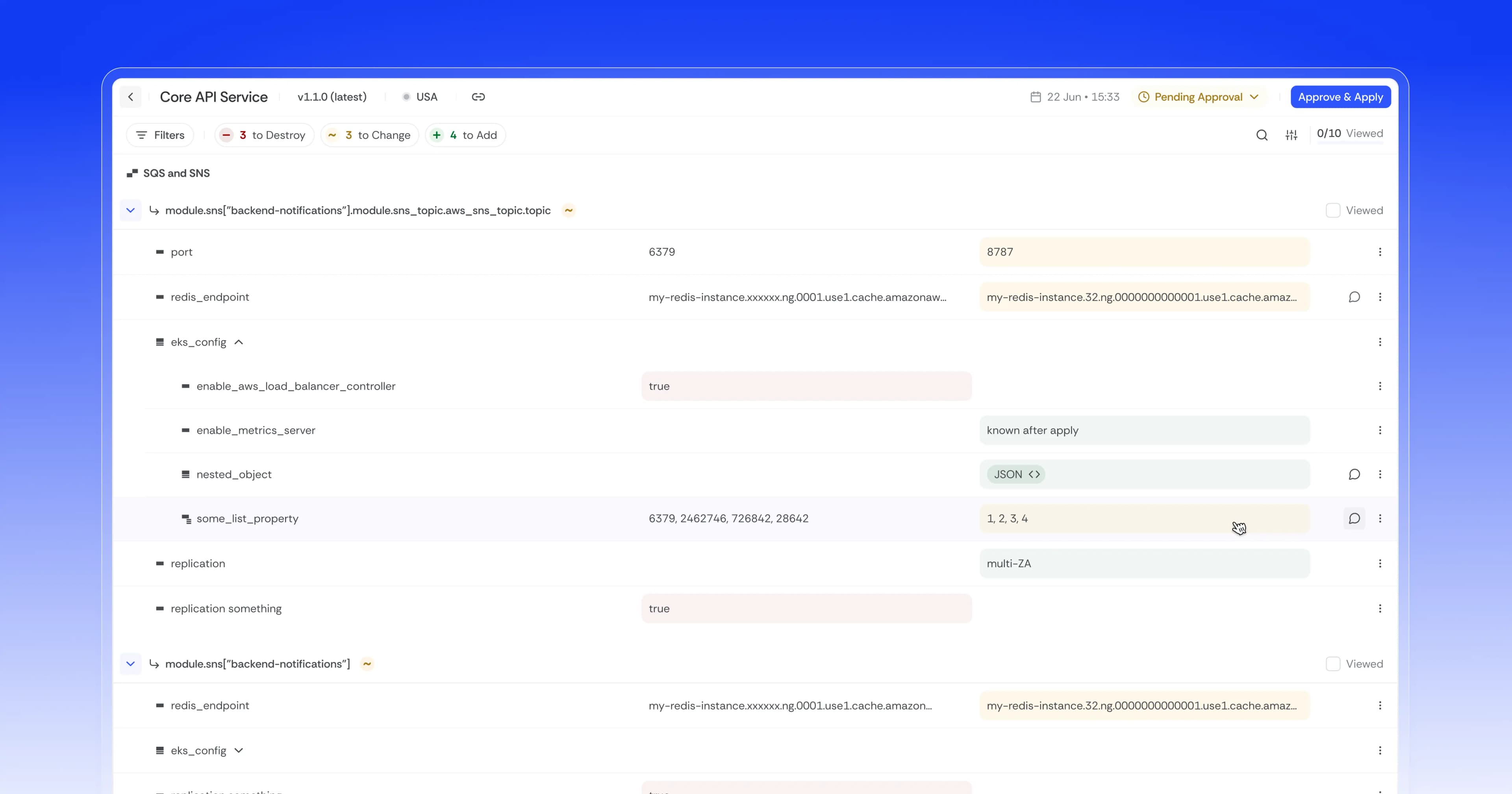
Planning Cloud Infrastructure at Scale: Introducing Bluebricks Planner for Seamless Collaboration

