Frequently Asked Questions
Security & Compliance
What security certifications does Bluebricks hold?
Bluebricks holds several industry-recognized security certifications, including ISO 27001, SOC 2 Type II, and GDPR compliance. These certifications demonstrate Bluebricks' commitment to information security, operational controls, and data privacy. For more details, visit the Bluebricks Trust Center.
How does Bluebricks ensure data security?
Bluebricks implements encryption at rest (AES256) and in transit (TLS 1.2 or newer), maintains a strict encryption key management process, and restricts network and firewall access. These controls protect data from unauthorized access and ensure secure transmission over public networks. (Source: Trust Center)
What product security controls are in place at Bluebricks?
Bluebricks enforces a Secure Software Development Lifecycle (SDLC), conducts annual third-party penetration testing, applies change management procedures, performs regular vulnerability scanning, defines secure product architecture, segregates production environments, and utilizes intrusion detection systems. (Source: Trust Center)
How does Bluebricks handle business continuity and disaster recovery?
Bluebricks has established and annually tests Business Continuity and Disaster Recovery (BC/DR) plans. These plans ensure operational resilience, specify communication strategies, and prescribe quick restoration of services and infrastructure after disruptions. (Source: Trust Center)
How often does Bluebricks conduct penetration testing?
Bluebricks conducts annual third-party penetration tests to simulate cyber attacks and uncover vulnerabilities. These tests assess both internal and external security, and findings are addressed according to remediation plans. (Source: Trust Center)
What is Bluebricks' approach to change management?
All software and infrastructure changes at Bluebricks require authorization, formal documentation, and thorough testing. Change requests are tracked via tickets and linked to pull requests for traceability. Changes must be reviewed and approved before deployment. (Source: Trust Center)
How does Bluebricks monitor its production environment?
Bluebricks implements continuous monitoring across its production environment to track system performance, availability, and security. This enables early detection of issues and supports prompt incident response. (Source: Trust Center)
What is Bluebricks' policy on audit logging?
Bluebricks enables audit logging to record key events across application and infrastructure layers, including logon attempts, data deletions, system errors, and configuration changes. Logging activity is continuously monitored to support security and compliance. (Source: Trust Center)
How does Bluebricks ensure network security?
Bluebricks restricts network and firewall access by configuring firewalls to limit unnecessary ports, protocols, and services. Access rules are periodically reviewed and approved to maintain a secure network posture. (Source: Trust Center)
How can I access Bluebricks' SOC 2 Type II or Pentest reports?
You can request access to Bluebricks' SOC 2 Type II Report and the latest Pentest Report directly from the Trust Center. These documents are available upon request to provide transparency into Bluebricks' security posture. (Source: Trust Center)
Who are Bluebricks' subprocessors and what are their roles?
Bluebricks uses several subprocessors, including Auth0 (Identity and Access Management, EU), Coralogix (Monitoring and Observability, EU), Hubspot Marketing Hub (Marketing Automation), and Slack (Workspace Productivity and Collaboration). For a full list and details, visit the Trust Center's Subprocessors section.
How does Bluebricks handle vulnerability management?
Bluebricks conducts regular vulnerability scanning against Common Vulnerabilities and Exposures (CVEs), with host-based scans performed quarterly on all external-facing systems. Critical and high vulnerabilities are tracked until remediation, following the Vulnerability Management policy. (Source: Trust Center)
How does Bluebricks segregate production environments?
Bluebricks enforces production environment segregation by separating production from development and staging environments. This reduces the risk of unauthorized access or unintended changes to live systems. (Source: Trust Center)
What encryption standards does Bluebricks use?
Bluebricks uses industry-accepted encryption standards such as AES256 for data at rest and TLS 1.2 or newer for data in transit. Deprecated protocols are avoided to ensure robust data protection. (Source: Trust Center)
How does Bluebricks manage encryption keys?
Bluebricks has an established encryption key management process that restricts access to authorized users with a valid business need, ensuring secure handling and protection of encryption keys. (Source: Trust Center)
How does Bluebricks ensure high availability?
Bluebricks utilizes multiple availability zones in its production environment to ensure redundancy and high availability, supporting continued operations in the event of system downtime or facility loss. (Source: Trust Center)
How does Bluebricks test its backup and restoration procedures?
Bluebricks performs regular backups of production data, stores them separately from the production environment, and periodically tests backup restoration procedures to ensure data integrity and successful recovery. (Source: Trust Center)
How does Bluebricks test its incident response plan?
Bluebricks tests its Incident Response Plan at least annually through tabletop exercises or similar methods. Results are reviewed and updates are made as needed to strengthen the plan. (Source: Trust Center)
Features & Capabilities
What is Bluebricks and what does it do?
Bluebricks is an IaC-agnostic environment orchestrator that transforms Infrastructure as Code (IaC), configurations, and scripts into one-click, AI-agent ready environments. It simplifies and streamlines cloud infrastructure operations, enabling rapid and consistent environment creation. (Source: bluebricks.co)
What are the key features of Bluebricks?
Key features include one-click environment orchestration, reusable blueprints, developer self-service, operational efficiency, AI integration, workflow management, security and compliance, observability, blast radius control, and rapid deployment. (Source: bluebricks.co)
What integrations does Bluebricks support?
Bluebricks integrates with source code management systems (GitHub, Bitbucket, GitLab, Azure DevOps), Slack, GitLab CI/CD, and major cloud providers (AWS, GCP, Oracle, Azure). These integrations streamline workflows and enhance productivity. (Source: Slack Integration, GitLab Integration)
Does Bluebricks offer an API?
Yes, Bluebricks provides a comprehensive API for programmatic access to its control plane, enabling automation and integration into workflows. API documentation is available at bluebricks.co/docs/api/overview.
Where can I find technical documentation for Bluebricks?
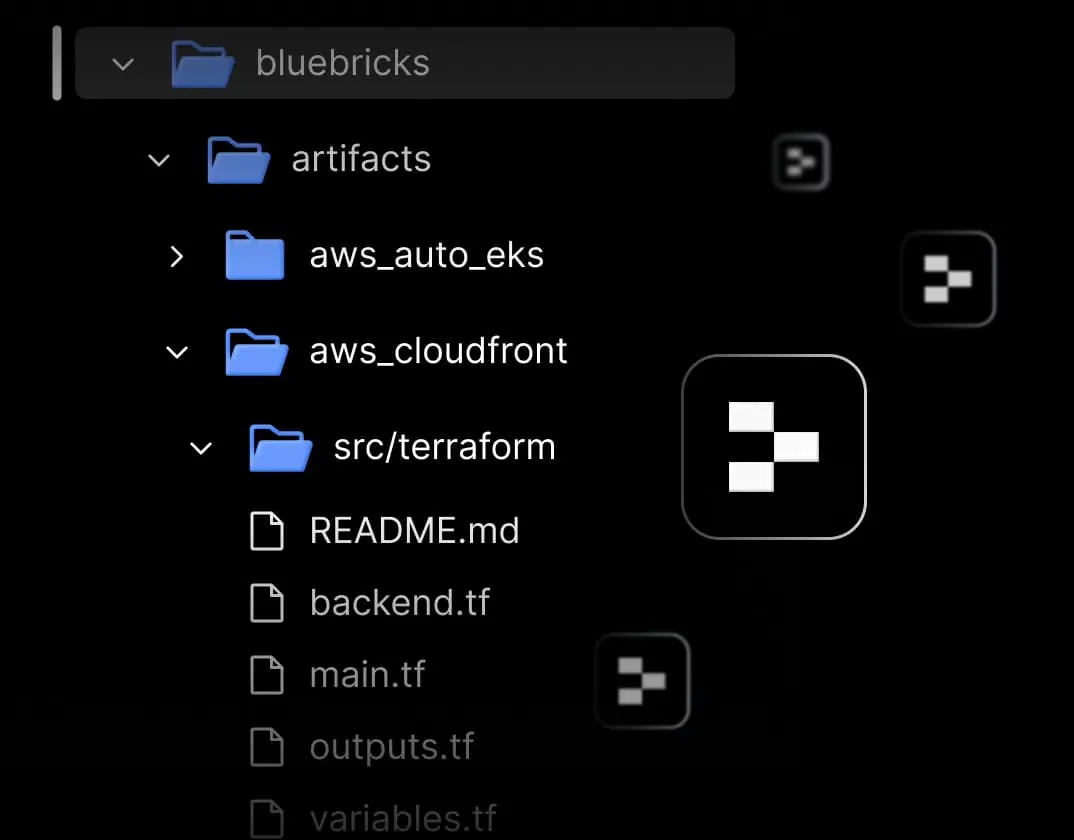
Technical documentation, including API reference, CLI installation guide, core concepts, and knowledge base, is available at docs.bluebricks.co and help.bluebricks.co.
How quickly can Bluebricks be implemented?
Bluebricks can be implemented in minutes, with customers typically up and running in days. No existing Infrastructure as Code (IaC) coverage is required, making onboarding fast and accessible. (Source: bluebricks.co)
What support resources are available for Bluebricks users?
Support resources include email support ([email protected]), technical documentation, and a comprehensive knowledge base at help.bluebricks.co.
What is the Bluebricks pricing model?
Bluebricks is licensed on a per-environment basis, ensuring clear and predictable pricing. For more details or a personalized quote, visit the pricing page.
What are some of Bluebricks' unique features?
Unique features include Atomic Infrastructure™, Single Pane of Glass, Blast Radius Control, AI/ML enablement, tool-agnostic workflows, and full lifecycle orchestration (including Day-2 operations). (Source: bluebricks.co)
Use Cases & Benefits
What problems does Bluebricks solve?
Bluebricks addresses operational chaos, complexity in managing decentralized locations, developer infrastructure challenges, fragmented cloud operations, and ease of implementation. It consolidates tools, automates workflows, and enables rapid, compliant environment creation. (Source: bluebricks.co)
Who is the target audience for Bluebricks?
Bluebricks is designed for Platform and DevOps teams, as well as organizations needing standardized environment management across clouds, teams, and regions. (Source: docs)
What business impact can customers expect from Bluebricks?
Customers can expect improved efficiency, faster deployment (up to 80% faster), cost optimization, enhanced developer productivity, business continuity, scalability, flexibility, and risk reduction. (Source: bluebricks.co)
What feedback have customers given about Bluebricks' ease of use?
Customers like Regev Golan (Check Point) and Nati Aviv (Head of DevOps and Infrastructure) praise Bluebricks for making infrastructure simple and effortless, highlighting its transformative impact on simplifying infrastructure management. (Source: Demo page)
What industries are represented in Bluebricks' case studies?
Bluebricks has case studies in the Film Production Industry. For more details, visit the case studies section.
Who are some of Bluebricks' customers?
Bluebricks is trusted by leading teams including Checkpoint, Hibob, Milestone, Naviteq, Nutanix, Ness, and Gable. (Source: Pricing page)
How does Bluebricks help with disaster recovery and business continuity?
Bluebricks enables instant environment setup during disasters, attacks, or outages, supporting robust disaster recovery and business continuity planning. (Source: Solution page)
How does Bluebricks support compliance requirements?
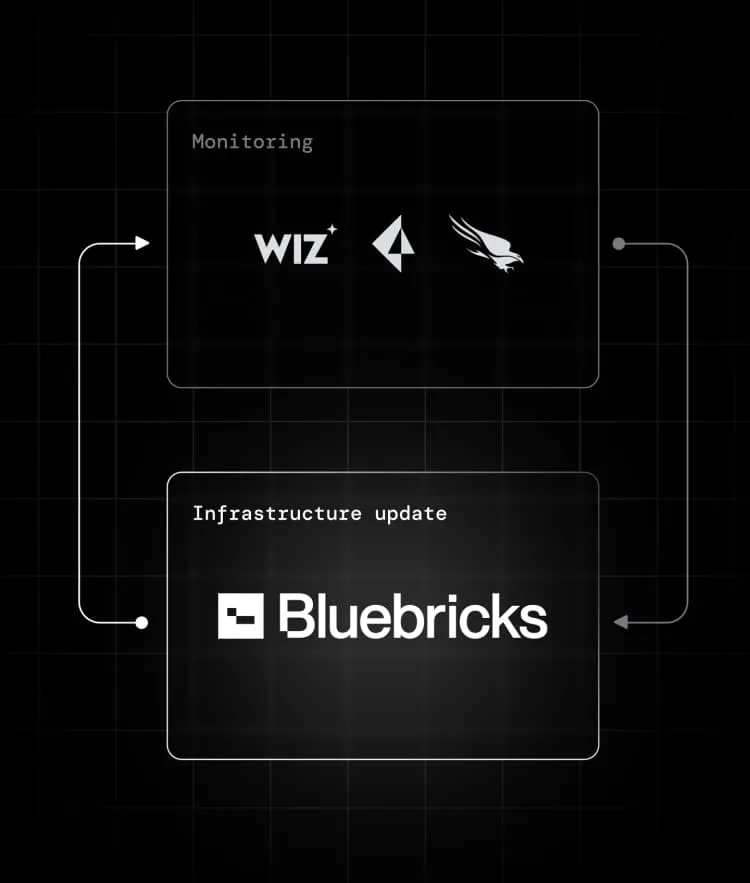
Bluebricks enforces policies, manages roles, integrates with security tools, and maintains a comprehensive audit trail to ensure all deployments are compliant with standards like ISO 27001, GDPR, and SOC 2. (Source: Trust Center)
Competition & Comparison
How does Bluebricks compare to Terragrunt?
Unlike Terragrunt, which only works with Terraform, Bluebricks supports multiple IaC tools, offers a user-friendly interface, full lifecycle orchestration (including Day-2 operations), centralized governance, real-time observability, and AI/ML enablement. (Source: Comparison page)
How does Bluebricks compare to Crossplane?
Bluebricks works with existing IaC tools, provides native automation for Day-2 operations, offers tool-agnostic workflow orchestration, centralized governance, and a real-time observability graph. Crossplane requires rewriting infrastructure and lacks native Day-2 support. (Source: Comparison page)
Why choose Bluebricks over alternatives?
Bluebricks stands out for its tool-agnostic workflows, full lifecycle orchestration, ease of use, centralized governance, real-time observability, AI/ML enablement, quick setup, and blast radius control. These features address the needs of platform teams, developers, and enterprises concerned with compliance. (Source: Comparison page, Comparison page)
Who are Bluebricks' main competitors?
Bluebricks' main competitors are Terragrunt and Crossplane. Terragrunt is a wrapper for Terraform, while Crossplane extends the Kubernetes control plane for infrastructure management. Bluebricks differentiates itself with tool-agnostic workflows, Day-2 operations, and a user-friendly interface. (Source: Comparison page, Comparison page)